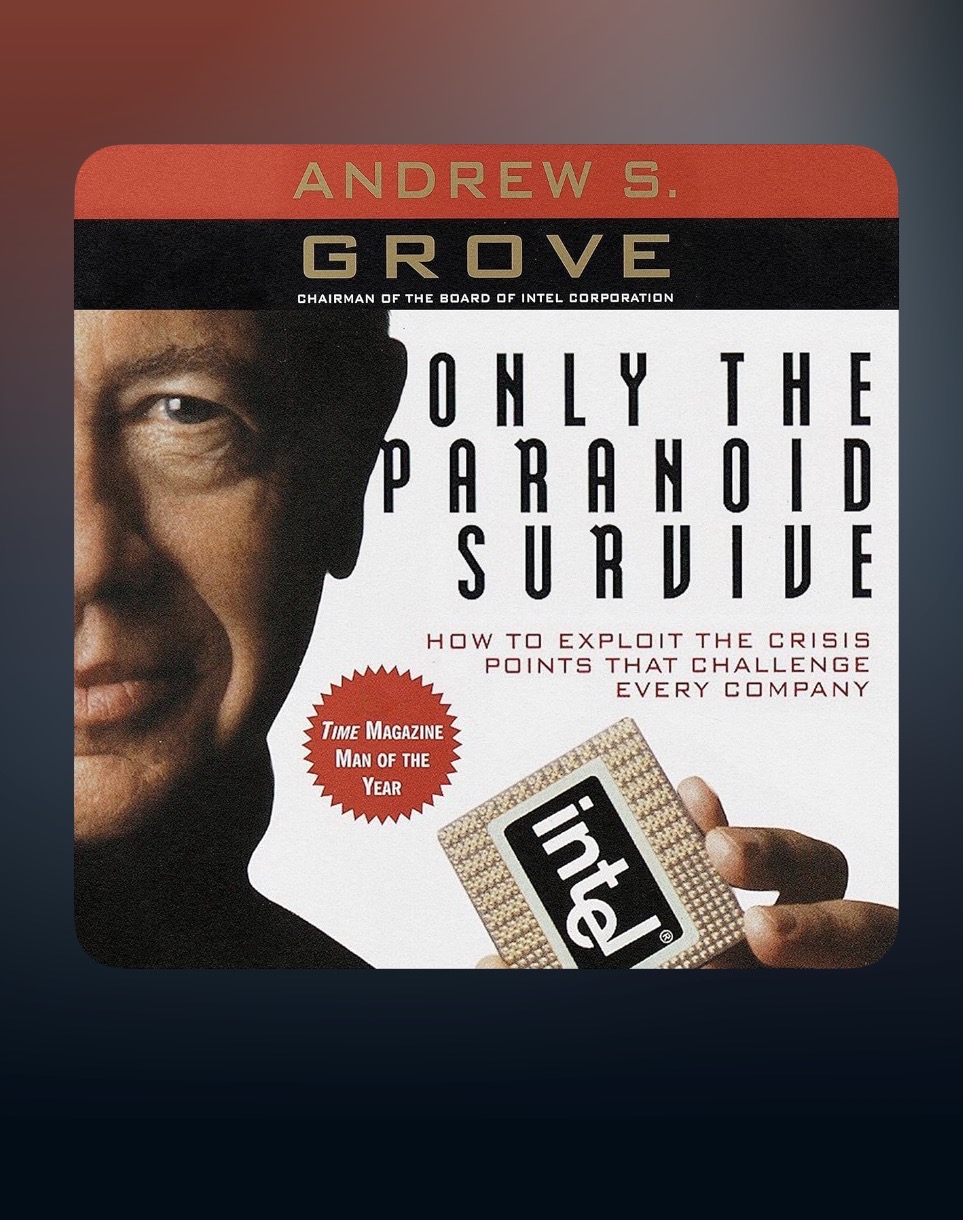
Only the Paranoid Survive
Andrew S. Grove
Thoughts?
This was not a bad book overall and I enjoyed listening to this audiobook. The ideas in the book weren't that new to me --not surprising as it's written in the 90's-- however, learning about Intel's history was quite interesting.
The best part was learning how Intel changed from a memory chip company to a microprocessor company in the 80s--I had no idea that they started with manufacturing memory chips. The staggering cost of fixing the Pentium bug was also unbelievable.
They had to change because Japanese companies could catch up in the memory business and they overwhelemed Intel so bad that made them leave that business almost entirely.
Andy calls these points Strategic inflection points which are periods in the life of a company where it faces a cataclysmic force by one or more of the six factors that determines a company's business--things like competitors, complementars, customers and so on.
It's extremely hard to foresee these points. But if you do, as the leader you must let your employees explore other strategies and how you can get out of the death valley. It's chaotic but you gotta let chaos reign for a while.
But then after that exploration phase, you gotta transition and start regining in chaos. Andy's advice is to put all your eggs in one basket and watch that basket carefully when navigating out of the death zone and chaos. Your employees sapped their resources by ending up in that death valley and pursuing multiple strategies at that point would just make things worse.
One last thought: Grove, like many writers in the 90s, criticizes Apple for their vision of end to end control of their products and how it's not gonna work. I saw the same criticism in Good to Great. But Apple survived and grew enormously. This is a good reminder that even smart people are bad at predicting the future.